History of Faber-Castell:  The Eight Generations


The 1st generation - Kaspar Faber (1730 - 1784)
1761 – 1784

The Family Dynasty of pencil makers began in 1761, when cabinet maker Kaspar Faber settled in Stein, near Nuremberg in Germany, to make his first pencil, the "Bleyweißsteffte". His exceptional attention to craftsmanship and quality gained him recognition in Nuremberg and consequently his business flourished. The founding of FABER-CASTELL thus occurred long before the French Revolution and the formation of United States of America.


The 2nd generation - Anton Wilhelm Faber (1758 - 1810)
1784 - 1810


The second generation of the business was named after Kaspar´s son Anton Wilhelm (1784 - 1810), "A.W. Faber". Anton Wilhelm gradually expanded the small craftsmen’s workshop by acquiring additional real estate, thereby increasing pencil production to meet the growing demand.


The 3rd generation - Georg Leonhard Faber (1788 - 1839)
1810 – 1839

 
Georg Leonhard Faber leads the pencil business through difficult times, both political and economic, however, the situation deteriorates and he is unable to avert a strong decline in production, thereby threatening the viability of the company.
 

The 4th generation - Lothar von Faber (1817 - 1896)
1839 – 1896


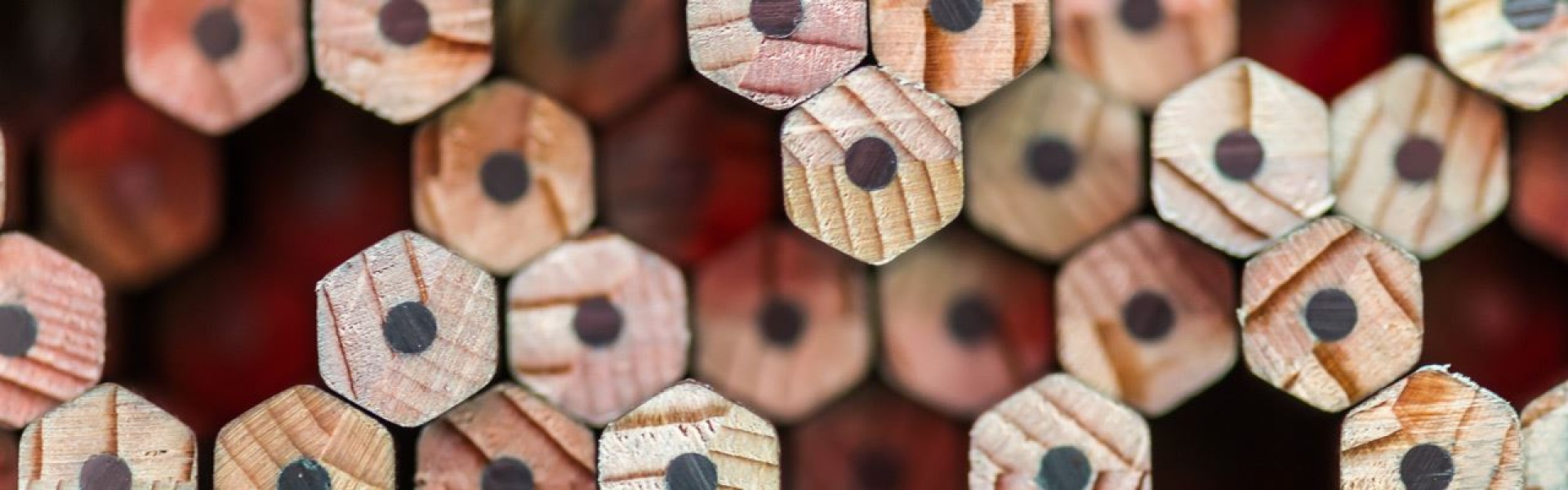
Following the death of his father Georg Leonhard in 1839, Lothar von Faber takes over the Stein pencil factory. His invaluable experience in London and Paris coupled with his drive, completely overhauls and repositions the paternal business. In his own words: "From the outset, my concern was to rise to the highest rank by making the best that can be made in the whole world". Under his initiative, the hexagonal pencil was first developed and marked "A.W. Faber" - the first branded pencil in the world.


The 5th generation - Wilhelm von Faber (1852 - 1893)
1877 - 1893


Lothar von Faber´s son, Wilhelm, is actively involved in the company from 1873 and in 1877 becomes designated successor. Wilhelm loses his two sons Lothar and Alfred Wilhelm at the early ages of three and four years.


Wilhelm, who suffered greatly from the death of his sons, also dies prematurely in 1893 at the age of just 42 years. He leaves behind his wife and three daughters. As a result, his father Lothar von Faber once again manages the company until his death in 1896. His widow, Baroness Ottilie von Faber, then inherits the "A.W. Faber" company and manages the company until the turn of the century.


In 1900, Count Alexander Graf von Faber-Castell joins the management.


The 6th generation - Alexander Graf von Faber-Castell (1866 - 1928)
1900 - 1928


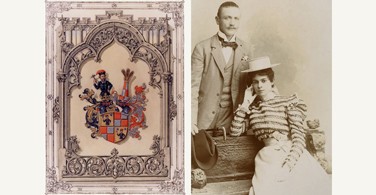
In 1898, Baroness Ottilie von Faber (1877 - 1944), marries Count Alexander zu Castell-Rüdenhausen, who is a descendent of one of Germany´s oldest noble families. Lothar, prior to his death, had prepared a testamentary disposition, by means of which he ensured that future generations would always have to integrate the name "Faber" into the new family name. Thus the new family line of "Count and Countess von Faber-Castell" comes into being and as such, the new company name "FABER-CASTELL".


The 7th generation - Roland Count von Faber-Castell (1905 - 1978)
1928 - 1978


Following the death of Count Alexander in 1928, his son Count Roland takes over the company management. In 1931-32 Faber-Castell acquires the "Johann Faber" pencil factory and thus simultaneously an interest in its "Lapis Johann Faber" subsidiary in Sao Carlos, Brazil. 1955 sees the setting up of the manufacture of wood-cased pencils in Ireland, where ballpoint pens are also produced at a later stage and in 1960, a sales company is once again founded in France. In 1965, a ballpoint-pen factory is set up in Peru (Lima). As a leading manufacturer, it now also produces markers and felt-tip pens.


In 1967, Faber-Castell acquires the majority interest in the lead and colored pencil factory in Sao Carlos (Brazil); which today is the largest worldwide.


The 8th generation - Anton Wolfgang Count von Faber-Castell (born 1941)
Since 1978


Following the death of his father Count Roland, Count Anton Wolfgang von Faber-Castell takes over the helm of the company in 1978 and runs it according to his motto: "Rediscover products of the past and cultivate traditional lines.” Today, after 250 years of persistent growth the Faber-Castell Group is more successful than before and continues to expand its horizons into the new century.